
Public Money, Private Agenda -- The Use and Abuse of MPLADS by A Surya Prakash provides a comprehensive look at the Members of Parliament Local Area Development Scheme, which was launched 20 years ago in 1993. Excerpts from the book.

The two leaders discussed the Ukraine crisis and several regional and global issues including increasing trade relations and cooperation in the field of mitigating the impact of climate change during their bilateral talks at the Danish Prime Minister's official residence in Mareinborg near Copenhagen.

Blame the voter, who invariably chooses the promise of hand-outs today in preference to a vague promise of, say, better schools tomorrow. Getting the Supreme Court to issue an edict, or Parliament to pass a law, is no solution, observes T N Ninan.

'There have been many cases where clients have indicated that they feel suicidal as they feel they have no other options to deal with their financial hardship.'

US proposal to raise the global corporate tax rate to 28% from 21% might face resistance from countries unwilling to give up their edge and compete with America on its terms.

The government should set up a dedicated fund to rescue Indian agriculture.

Nirmala Sitharaman's messaging was clear when she presented a well-balanced Budget with an eye on state elections in nine states followed by a general election next year, observes Ramesh Menon.
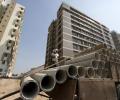
The logistics segment is becoming a hot favourite of private equity, of late.

The Centre is likely to cut budgetary support to the railways by around Rs 5,000-10,000 crore for 2018-19, out of the total budgeted GBS of Rs 53,060 crore. Due to this cut in GBS, the railways is likely to depend more on borrowings, asset monetisation, and internal generation to meet the capex target of Rs 1.465 trillion for the current year.

Mr Adani has a fight on his hands. It is not a fight to the death, asserts T N Ninan.
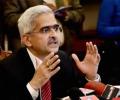
Stating that recent agriculture reforms have opened new opportunities, the RBI Governor said the farm sector is emerging as a bright spot.

Sri Lanka's Hambantota Port authorities said the high-tech Chinese research vessel that was to dock there on Thursday won't reach the port as scheduled, according to a media report, days after India expressed security concerns over its presence in the island nation.

The rumblings of discontent from Righteous Europe over Qatar's admittedly appalling human rights record can only be viewed as deeply disingenuous and phoney, argues Kanika Datta.

The government has spent a little less than one-third of the Budget estimate of capital expenditure, it can still spend about Rs 20,000 crore this year without disturbing its fiscal deficit target.

Prime Minister Narendra Modi began his engagements in the US on Thursday by meeting with leading American CEOs from five different key sectors and highlighted the economic opportunities in India.
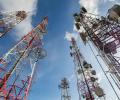
The government expects to realise Rs 35,100 crore from the partial sale of Bharatnet fibre assets and around 13,500 mobile towers owned by state-run telecom firms as part of its national monetisation pipeline released on Monday. Government think tank Niti Aayog has valued over 2.86 lakh kilometre of optical fibre assets laid by BBNL and BSNL under rural broadband project Bharatnet at Rs 26,300 crore, according to the National Monetisation Pipeline (NMP) document. According to the document, BSNL's 13,567 mobile tower assets and MTNL's 1,350 towers have been valued at Rs 8,800 crore.

India was among the top-five economies with the largest general government capital stock level, said, in 2015, an International Monetary Fund report called "Making Public Investment More Efficient". The report fuelled a debate on countries sitting on piles of cash that could be used better. India was believed to have public assets worth $4.5 trillion. The report urged countries to start asset recycling. Six years after the report, Australia's success in asset recycling has turned India into a believer; despite doing averagely in its previous efforts on roads, railways or meeting its divestment targets.

Billionaire Mukesh Ambani on Monday pressed for bridging the digital divide "both among nations and within nations", saying connectivity and communications have become the fundamental rights of every person. Also, there is a need to bring back the economies around the globe. Speaking at the Qatar Economic Forum, he said it is difficult to imagine what India would have been without the 4G telecom network during the pandemic. "The digital divide must be bridged, both among nations and within nations.
China's embassy in Colombo has sought an urgent meeting with senior Sri Lankan authorities after Colombo sought a deferment of the planned docking of a high-tech Chinese research vessel at the strategic Hambantota port over which India raised concerns, sources said.

The government has used four methods to value the assets that it is looking to monetise under its Rs 6-trillion National Monetisation Pipeline (NMP). The value of the assets on the block is indicative that the government is expected to realise either in the form of upfront accruals or by the way of private sector investment, NITI Aayog said in its report. Valuations are essentially estimates, so multiple methodologies are useful to get a range, said Manish Agarwal, infrastructure expert and co-founder of AskHowIndia.org. Different valuation methodologies depend on the different assumptions that are being considered for valuing a business, he said.

2015 is going to witness new agreements on climate change.

The upcoming Budget gives Finance Minister Arun Jaitley a chance to let states boost spending.

During the current financial year, 25 companies have raised Rs 28,220 crore through IPOs

Stocks to watch: BHEL, L&T, IRB Infra and Suzlon

The Asian markets are largely trading in the green, taking heart from a positive close on Wall Street.

The status of the current submarine force level is alarming and we need to address the threat perceptions expeditiously. Critical decisions pertaining to national security cannot be delayed any further due to the rapidly changing maritime threat perceptions and growing strategic importance of the Indian Ocean region, asserts Commodore Venugopal Menon (retd).

Almost 2,000 companies whose private provident and pension funds have invested in non-convertible debentures of IL&FS group firms are staring at the prospect of booking losses to the tune of Rs 9,000 crore or more if the interest income is added.

Road Transport Minister Nitin Gadkari known for promoting innovative ideas in transportation, created a stir some time back when he pitched for 100 per cent electric mobility by 2030. In an interview with Megha Manchanda & Jyoti Mukul, he talks about the Central Road and Infrastructure Fund (CRIF) and electric vehicles.

Single window clearances for realty must.

All India needs to do is focus on making its business environment more friendly.
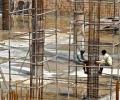
Hike in planned public-sector capital expenditure will be credit-positive for infra cos

Recent derailments had brought the vulnerability of the national carrier into the limelight. For the railways, the fund allotment of Rs 1 lakh crore towards safety, is a welcome move, says Subrat Nath.

Additionally, promoter Naresh Goyal and Etihad Airways, which owns a 24 per cent stake in the airline, will infuse around Rs 2,000 crore into the airline, sources aware of the development said.

Foreign Direct Investment into India rose by 13 per cent in 2020, boosted by interest in the digital sector, and while fund flows "declined most strongly" in major economies such as the UK, the US and Russia due to the Covid-19 pandemic, India and China "bucked the trend", the UN has said.

Making a case for an optimal fiscal stance, the Economic Survey on Friday said growth leads to debt sustainability and not necessarily vice-versa. "This is because debt sustainability depends on the 'Interest Rate Growth Rate Differential' (IRGD) i.e. the difference between the interest rate and the growth rate in an economy. "With the Indian context of potential high growth, the interest rate on debt paid by the Indian government has been less than India's growth rate by norm, not by exception," it said.

While Rs 37,461.01 crore has been allocated for higher education, Rs 56,386.63 crore has been earmarked for school education.

'From March 2020 to November 2021, the combined wealth of the billionaires of this country has doubled.'

Billionaire Mukesh Ambani's Reliance Industries Ltd on Friday announced the buyout of British battery maker Faradion Ltd for an enterprise value of 100 million, as the oil-to-retail conglomerate continued with the acquisition of end-to-end technology for its multi-billion-dollar clean energy portfolio. Reliance New Energy Solar Ltd (RNESL), a unit of the nation's most valuable company, signed definitive agreements to acquire 100 per cent shareholding in Faradion for an enterprise value of 100 million and will invest an additional 25 million as growth capital to accelerate the commercial roll-out, the company said in a statement. Based out of Sheffield and Oxford in the UK and with its patented sodium-ion battery technology, Faradion is one of the leading global battery technology companies.

The Indian economy is rapidly normalising towards pre-pandemic activity levels, even as uncertainty exists about coronavirus mutations and repeated infection waves, industrialist Kumar Mangalam Birla said on Wednesday. Vaccination is picking up pace, which would improve India's resilience against a potential third wave, the chairman of Aditya Birla Group said while virtually addressing shareholders at the AGM of group firm UltraTech Cement Ltd. Moreover, various steps taken by the RBI and the government have helped in containing the economic disruptions of the pandemic, Birla added.
